Case 2026-01-06 • 3,509 views

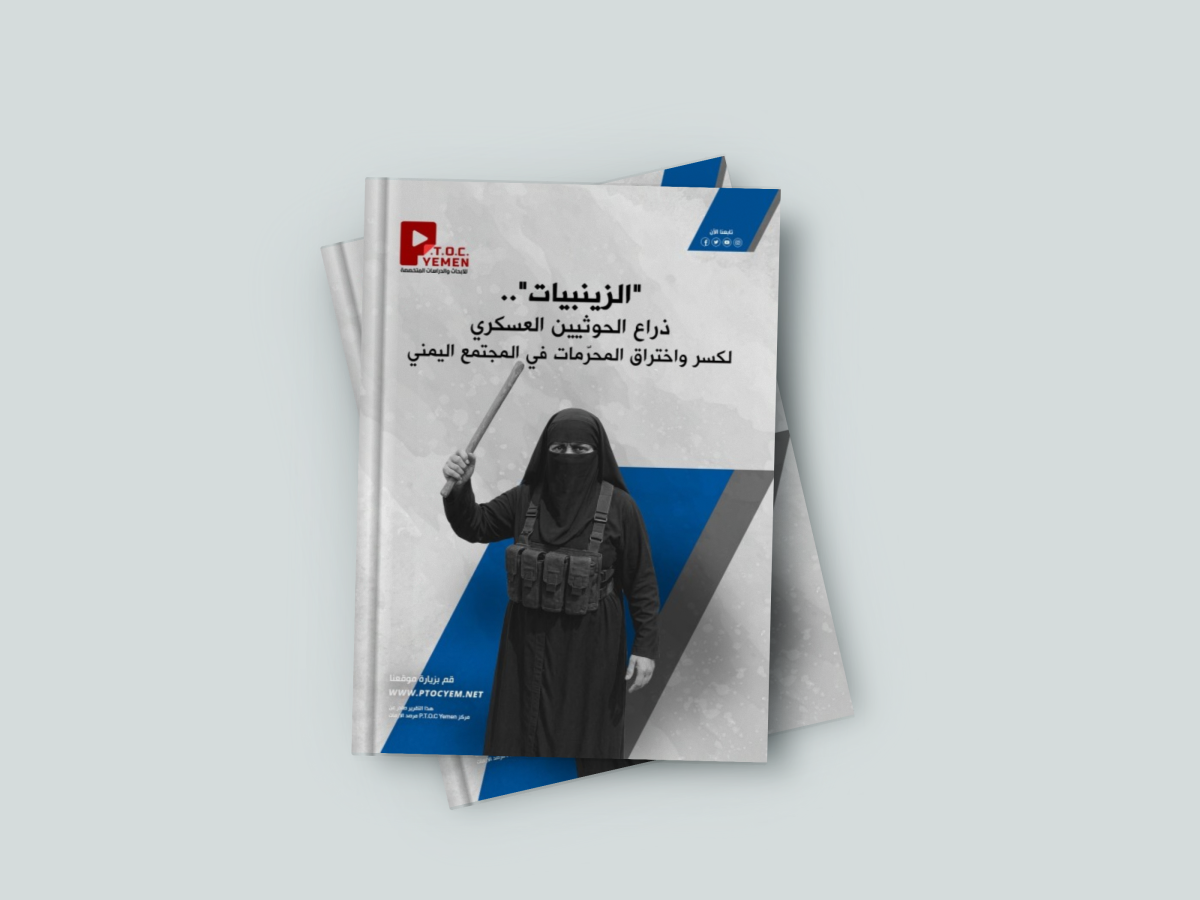
PTOC Yemen Center reveals the most dangerous women's formation for Houthi: Zinnabiyat .. A repressive device that arrests and tortures women and runs spying and smuggling networks
Sana’a – Special Report

A new report issued by the P.T.O.C Yemen Center for Research and Specialized Studies has revealed extensive and unprecedented details about what is known as the “Zeinabiyat” — the female formation affiliated with the Houthi militia, described as one of its most dangerous security and intelligence arms, and one of its main tools for suppressing Yemeni society, especially women, under a religious and ideological cover.

According to the report, this formation emerged after the Houthis seized control of the capital, Sana’a, in September 2014. It was modeled after the female organizations affiliated with Lebanon’s Hezbollah, designed to be a seemingly “soft” security arm but in reality highly brutal in its field operations. Its members have received training both inside Yemen and abroad in Lebanon and Iran, under the supervision of the Iranian Revolutionary Guard Corps (IRGC) and Hezbollah. The training covered combat tactics, intelligence gathering, interrogation, and ideological indoctrination.

The Zeinabiyat are estimated to number around 4,000 women, operating outside the framework of the official female police force. They wear black abayas along with a niqab or face veil during missions to conceal their identities. The formation is divided into four main divisions: the military division, the electronic division for propaganda and surveillance, the arrests division, and the preventive espionage division, tasked with gathering information on society and its institutions.

These divisions are led by prominent female figures from influential Houthi families, including Fatima Hussein Badr al-Din al-Houthi, daughter of the group’s founder and Deputy Director of the Security and Intelligence Service for Women and Organizations; Ibtisam al-Mutawakkil, who supervises university indoctrination; and Huda al-Imad, who plays a pivotal role in recruitment within the academic community.

From logistical support to direct repression
The report confirms that the Zeinabiyat have shifted from roles of logistical assistance to direct participation in raids, break-ins, arrests, interrogations of detainees, and the execution of both physical and psychological torture. They also spy on women in both public and private life and manage propaganda campaigns targeting girls and female students through schools, universities, and social media platforms.

Between 2017 and 2022, the Yemeni Network for Rights and Freedoms documented more than 1,444 direct violations committed by the Zeinabiyat, including 571 arrests and kidnappings, 290 home raids, 118 cases of torture in prisons, 86 injuries from direct assaults, 48 incidents of harassment or rape, 20 cases of forced recruitment, and more than 300 cases of extortion, threats, and surveillance.

Among the most notable incidents mentioned in the report are:

  • The storming of a private school in Sana’a in November 2022, where the female principal and staff were attacked with electric shock devices following a dispute with a Houthi supervisor.

  • The brutal assault on a female doctor in Ibb city, tearing her clothes.

  • The raid on a girls’ school in Hamdan to prevent the celebration of the September 26 Revolution.

  • The demolition of the home of citizen Faiz al-Mukhalafi in June 2025, expelling women and children despite his possession of legal ownership documents.

  • The armed deployment in Sana’a in September 2023 to prevent women from raising the Yemeni Republic flag, along with verbal and physical assaults.

The role of the Zeinabiyat is not limited to direct repression. The report details their involvement in broader criminal activities, including the recruitment of women of African origin — particularly from Somalia and Ethiopia — to spy on international and local organizations, infiltrating wealthy business and tribal families by working as domestic workers or nannies, smuggling narcotics and hashish from Sana’a to liberated provinces, participating in human organ trafficking networks, and luring political and religious figures opposed to the Houthis into compromising situations for blackmail purposes.

Training takes place in Yemen at sites including the Balqis Club in Sana’a, as well as in secret camps within schools and sports/cultural clubs. Some members have received advanced training in Lebanon and Iran under IRGC and Hezbollah trainers. The report also notes the Houthis’ exploitation of international “women’s empowerment” programs implemented in Sana’a to train Zeinabiyat members under the guise of civilian work.

The report highlights that Yemeni society and tribes view the use of women in acts of repression as a “black disgrace” that contradicts authentic Yemeni values, considering such practices to be foreign imports from Iran. Nevertheless, some women have been forced to join the Zeinabiyat due to poverty or the loss of a breadwinner — especially in families who lost sons on Houthi battlefronts.

The P.T.O.C Yemen Center concluded its report by calling on the international community to launch an independent investigation and designate the Zeinabiyat as a terrorist group, impose sanctions on its leaders, review women’s empowerment programs in Houthi-controlled areas, and provide protection mechanisms for victims. It also urged the Yemeni government to systematically document violations, raise community awareness of the dangers of this formation, and reject any attempts to recruit women into it.

#PTOCYemen

You can download the report file directly
Download Report