PTOC Yemen Center reveals that the Houthis have transformed Al-Qaeda and ISIS operatives into arms of the security and intelligence apparatus.
Sana’a – Exclusive
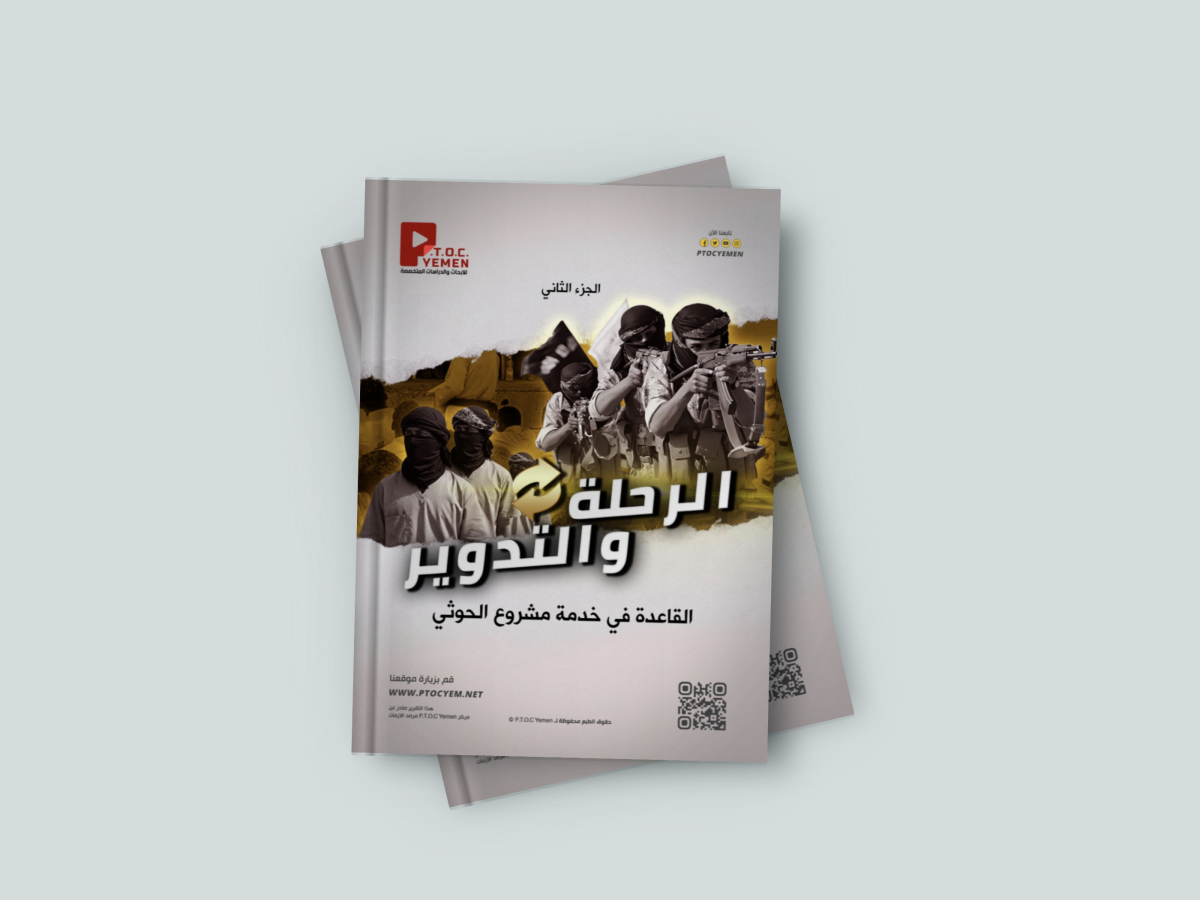
The Crisis Observatory at P.T.O.C Yemen Center for Research and Specialized Studies has released a new report in its “Terror Alliances” series, unveiling one of the most dangerous security files in Yemen. The report reveals that the Houthi militia has turned prisons into closed laboratories for recycling Al-Qaeda and ISIS operatives, preparing them as field and intelligence arms for its own security and intelligence apparatus—an explicit violation of international counterterrorism laws.
According to the report, the Houthis no longer view Al-Qaeda and ISIS members as ideological adversaries but as tools for temporary use. Hundreds of detainees accused of terrorism have been released and granted financial and logistical privileges, weapons, and protection in exchange for joining Houthi battlefronts in the governorates of Marib, Al-Bayda, Shabwa, Abyan, and Hadramout. The militia has also established secret camps in Saada, Amran, and Dhamar to train these operatives militarily and ideologically, providing them with fake identities and monthly salaries of up to $260 USD.
The report identifies the Houthi Security and Intelligence Service, led by its chief Abdulhakim Hashim Ali Al-Khaiwani (Abu Al-Karar), as the central player in this operation. From the moment detainees enter prison, they are screened by embedded officers and spies to determine who can be repurposed. Thus, prisons have become factories for producing fighters and intelligence agents under the direct supervision of the agency’s leadership.
To justify this policy, the militia has reinterpreted religious texts and jihadist concepts such as “necessary alliance” and “common enemy,” promoting them in jurisprudential sessions inside prisons and training camps. This ideological indoctrination extends beyond Al-Qaeda and ISIS members to include Houthi fighters, who are persuaded of the legitimacy of this temporary alliance.
The report also highlights the emergence of the so-called “Change and Liberation Movement” in Hadramout, adopted by the Houthi militia as a political and ideological cover to justify its covert alliances with extremist groups. This movement employs a dual discourse—externally promoting slogans of freedom, independence, and opposition to foreign intervention, while internally serving as a tool to market the strategy of recycling Al-Qaeda and ISIS operatives within Houthi ranks against their rivals. The center warns that this movement aims to mislead public opinion and conceal its secret activities that threaten national and regional security.
For the first time, the center reveals the names of Houthi leaders involved in this file, based on confidential information. These include:
- Abdulqader Al-Shami – Deputy Head of the Security and Intelligence Service and primary liaison with detainees
- Abdulkarim Al-Houthi – Minister of Interior and top security official overseeing release decisions
- Abdullah Yahya Al-Moayad (Abu Ali Al-Hakem) – Head of Military Intelligence and responsible for redistributing released operatives to battlefronts
Field operatives also play key roles, including:
- Abu Imad Al-Marani
- Ali Abdullah Al-Qasimi
- Abu Mohammed Al-Mutahar
- Ibrahim Saleh Ahmed Al-Mas
- Abdulsalam Ahmed Hassan Al-Murtada
- Abu Mohammed Al-Saqqaf
The report further reveals details of secret deals under which dangerous Al-Qaeda leaders were released, such as Sami Fadl Abdrabuh Dayan—implicated in the assassination of General Salem Qatan—who was recruited by the Houthis to form cells in Abyan. Others involved in the Sab’een Square bombing were also released and later appeared on battlefronts in Marib, Al-Jawf, and Hadramout.
These operatives’ journey doesn’t end at the prison gates—it begins there. They are transferred to secret training camps in Saada, Amran, and Dhamar before being deployed to battlefronts or embedded in intelligence cells tasked with planting IEDs, carrying out assassinations, and gathering field intelligence. Government security agencies have documented satellite communication devices in military sites linked to Al-Qaeda operatives in Abyan, clearly indicating the scale and nature of support provided.
The center warns that this policy has revived sleeper cells and destabilized security in liberated governorates. Recycled operatives have become ticking time bombs, with some contributing to the fall of districts in Marib, Al-Jawf, and Al-Bayda through their collaboration with the Houthis, triggering mass displacement toward Al-Jufaina camp—the largest in Yemen. This reflects the danger of exporting the strategy of recycling terrorism to other conflict zones, threatening regional and international security.
In conclusion, P.T.O.C Yemen Center calls on the international community to classify the “terrorist recycling” strategy as a war crime, establish a global database of released operatives, tighten oversight of prisons in Houthi-controlled areas—including secret facilities—and impose strict sanctions on implicated Houthi leaders. The center also holds Iran and the Revolutionary Guard responsible for supporting this destructive project in Yemen.
Related Items
View More